On this dayOct 03, 1963
Florida Court Convicts Students After Peaceful Protest of Segregated Theater
State Archives of Florida
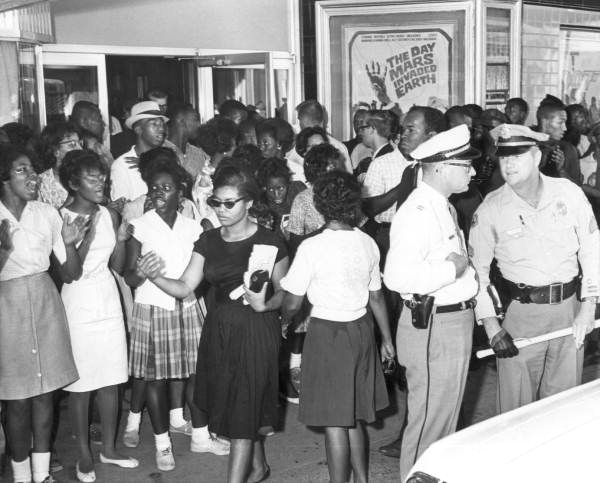
On October 3, 1963, a court in Tallahassee, Florida, convicted more than 100 Black college students of contempt of court for singing and clapping outside the Florida Theater, a “white-only” movie theater located a few blocks from the state Capitol, in violation of a court’s injunction against civil rights protests.
By 1963, many Black students and residents in Tallahassee had years of experience engaging in civil rights activism and nonviolent protest. In 1956, inspired by the Montgomery Bus Boycott, two Black students at Florida Agricultural and Mechanical University (FAMU), a historically Black university in Tallahassee, were arrested after taking the only two available seats on the bus in the “white-only” section. Black residents joined the two students in a bus boycott in May 1956, which led to the desegregation of Tallahassee buses the following year.
In 1960, FAMU students and members of the Congress of Racial Equality, a national civil rights organization founded in 1942 by an interracial group of students in Chicago, launched sit-in demonstrations at department store lunch counters that ended segregated restaurants in 1963.
Also in 1963, students conducted swim-in protests of segregated municipal swimming pools and picketed outside of “white-only” movie theaters that barred entry to Black people or forced them to sit separately in balconies while reserving the best views and seating for white people.
On May 30, 1963, Leon County Circuit Court Judge Ben Willis issued an injunction limiting the number of demonstrators opposing segregated theaters to just 18 people and mandating that they be spaced eight feet apart and “quiet.” Orders that criminalized peaceful protests or otherwise sought to render demonstrations ineffectual became an increasingly common tactic to suppress civil rights demonstrations throughout the country.
In September 1963, about 200 Black students, including organizers Patricia Stephens Due and Ruben Kenon, attempted to purchase tickets at the Florida Theater, which did not admit Black moviegoers. When they were refused, they stood outside the theater and sang freedom songs, such as “We Shall Overcome,” “We Are Not Afraid,” and “Black and White Together.”
Citing the injunction, police arrested more than 150 students. While the Black students sang and clapped, some 200 white people shouted at them from across the street and cheered police. No one in the white crowd was arrested for violating the injunction’s demand for “quiet.”
Police continued arresting dozens more Tallahassee residents who came to support and pray outside the jail where the students were confined. In all, over 350 people—nearly all of whom were Black—were arrested over the course of three days. The jail quickly reached capacity, and many Black students were confined for days in crowded, unsanitary cattle enclosures at the Leon County Fairgrounds.
On October 3, Judge Willis found the demonstrators guilty of contempt for violating his injunction and sentenced them to pay up to $1,000 in fines or spend up to six months in jail. Students with histories of civil rights activism received the steepest fines and longer jail terms. Many students believed paying a fine would indicate tacit approval for segregation laws and opted instead to remain in jail.
About EJI
The Equal Justice Initiative works to end mass incarceration, excessive punishment, and racial inequality.
 Learn more
About this website
Until we confront our history of racial injustice and its legacy, we cannot overcome the racial bias that exists today.
 Learn more